What is a Tithi?
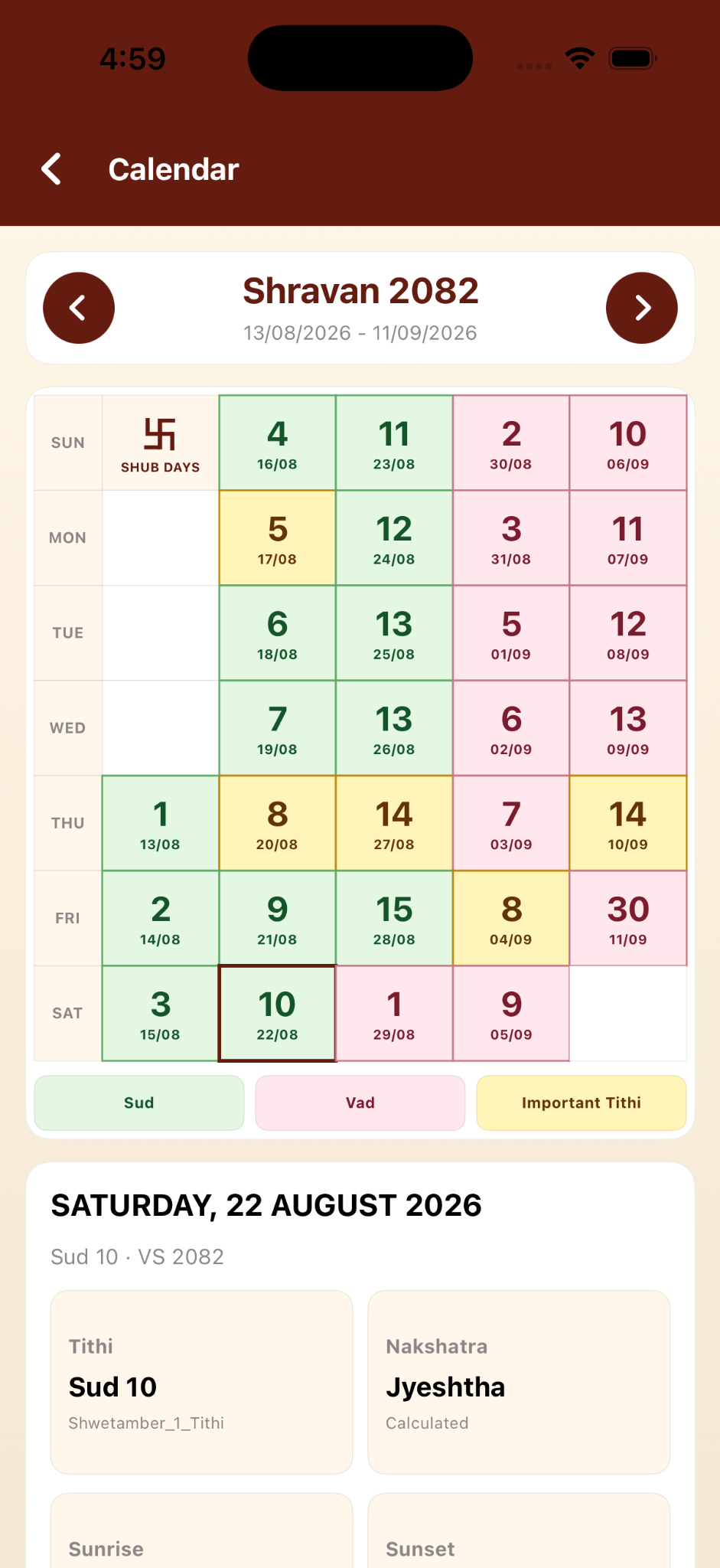
A Tithi is a lunar-day measure based on the angular relationship between the Sun and Moon. There are thirty Tithis in a lunar month, conventionally divided between the bright half (Sud) and dark half (Vad). In day-to-day Jain use, the Tithi name is often the natural way to identify a religious date.
Why Tithi matters in Jain practice
Fasts, festival observances, Paryushan-related dates, Kalyanaks and many recurring religious routines are associated with a Tithi. That makes the Panchang more than an astronomical table: it is a practical calendar for planning and remembering religious life.
Tithi and sunrise
A Tithi can begin or end at any time of day. For calendar assignment, the Tithi at sunrise often has special importance. Because lunar Tithi length is not exactly twenty-four hours, the same Tithi may touch two sunrises or, occasionally, no sunrise at all.
Kshay and Vruddhi
When a Tithi does not occur at sunrise on any civil date it may appear as a Kshay (lapsed) Tithi in the sunrise-based calendar sequence. When the same Tithi is present at two consecutive sunrises it may appear as Vruddhi (repeated/double). Jain Panchang provides a dedicated Kshay/Vruddhi view so these exceptions are visible rather than hidden.
Sect and tradition
Different Jain traditions may use different Panchang datasets or observance conventions. Users should follow the Panchang and religious guidance appropriate to their sect, Sangh or Guru, particularly for vrata and observance decisions.
Use this guide with the Jain Panchang app
Learn what Jain Tithi means, why Tithi is central to Jain religious dates, Sud and Vad, sunrise relevance, Kshay and Vruddhi Tithi. The Android and iPhone apps put the calculation beside the calendar so the explanation on this website and the practical daily screen work together.