
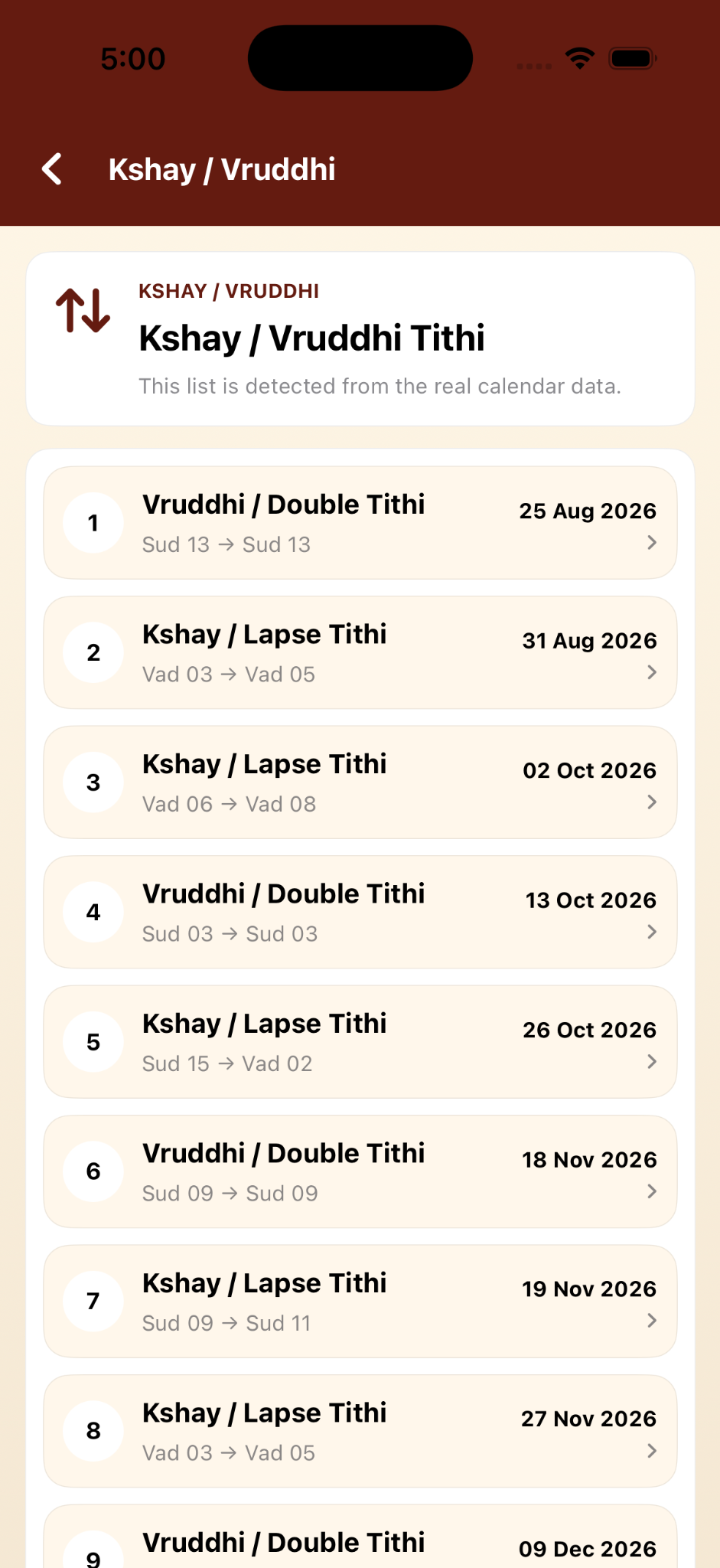
Vruddhi / Double Tithi
When the same Tithi is present at two successive sunrises, the sunrise-based calendar can show that Tithi on two civil dates. Jain Panchang identifies this as Vruddhi / Double Tithi.
Kshay / Lapse Tithi
When a Tithi begins after one sunrise and ends before the next, no sunrise occurs during that Tithi. In the sunrise-based date sequence it may therefore appear as a Kshay / Lapse Tithi.
Why a normal calendar can look confusing
If a calendar forces Tithi numbers into a simple one-day-one-number pattern, a user may think the data contains an error when a number repeats or jumps. A dedicated exception list makes the underlying sequence explicit.
Religious observance can require more rules
The astronomical condition is only one part of deciding a formal observance date. Jain traditions can apply specific rules for festivals, fasts and rituals, so users should follow the accepted Panchang and religious guidance for their community.
Planning ahead
The yearly list lets users see upcoming Kshay/Vruddhi dates before they arrive, which is useful when coordinating fasting, travel or community schedules.
Use this guide with the Jain Panchang app
Understand Kshay Tithi and Vruddhi Tithi in a sunrise-based Jain calendar, why a Tithi may lapse or repeat, and how Jain Panchang identifies them. The Android and iPhone apps put the calculation beside the calendar so the explanation on this website and the practical daily screen work together.